A custom-made suit should do three things at once: fit cleanly, feel comfortable for long wear, and look sharp in real life (not just on a mannequin). At 6e design in Hyderabad, we build suits around your body and your purpose—whether that’s a first suit for work, a wedding suit that photographs well, or a daily-wear option that stands up to commuting and long days.
Fit. Fabric. Finish. Those are the three pillars that determine whether you love your suit for years—or regret it after one event.
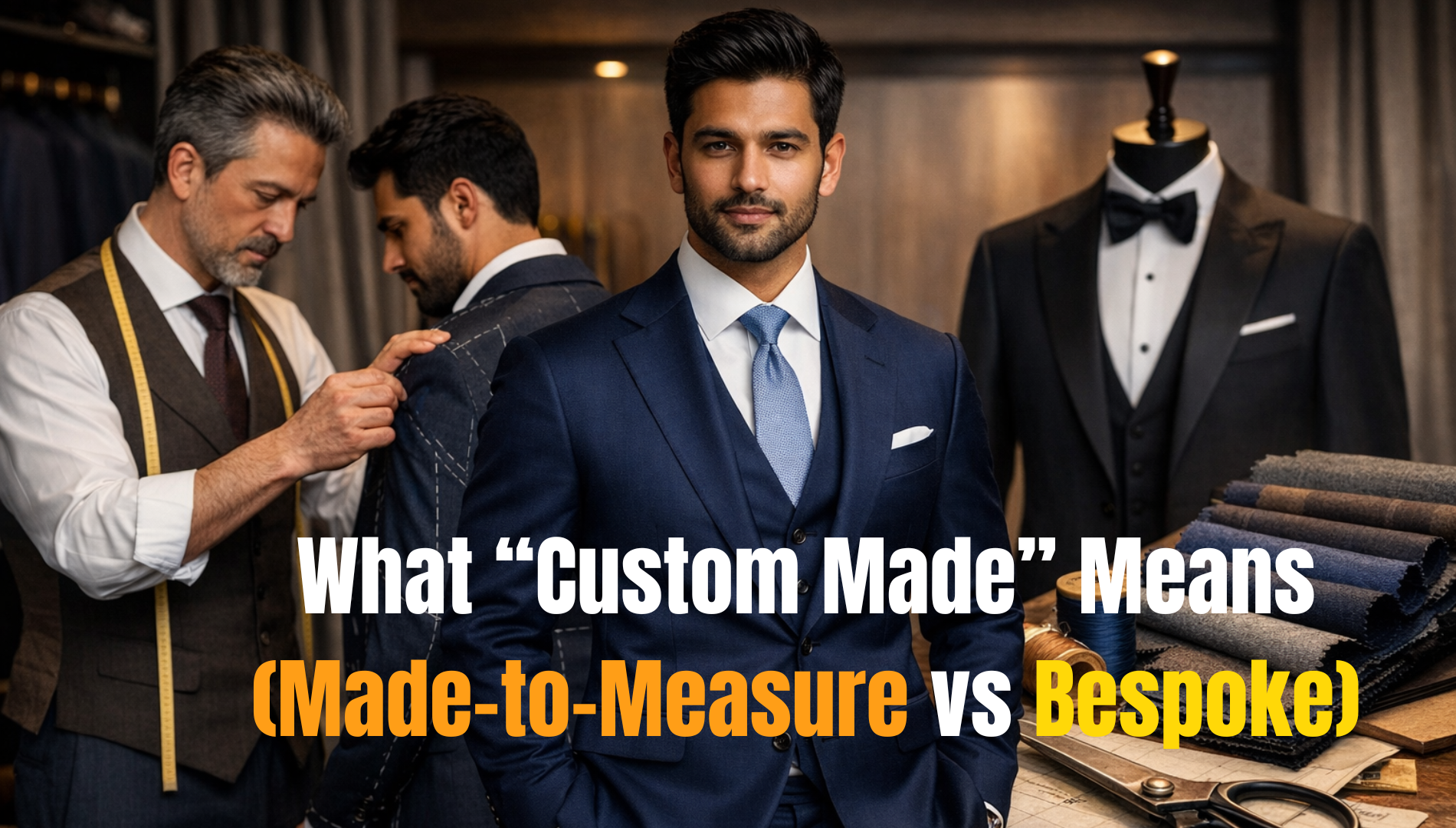
What “Custom Made” Means (Made-to-Measure vs Bespoke)
“Custom made” is often used broadly, but in tailoring it typically refers to two approaches: made-to-measure and bespoke. Understanding the difference helps you choose the right route for your timeline, expectations, and budget.
Made-to-Measure (MTM) starts with a proven base pattern that is adjusted to your measurements and posture. It’s then refined through fitting(s). MTM is usually the best option for most clients because it delivers a strong fit and personalization without the longer timelines associated with fully bespoke work.
Bespoke typically involves a pattern drafted from scratch for you, with multiple fittings for refinement. It’s ideal if you have highly specific style requirements, significant fit challenges, or you want the deeper craftsmanship journey that bespoke is known for.
Who should choose custom (and why)
Custom makes sense if you relate to any of the following:
- Off-the-rack jackets pull at the chest, collapse at the collar, or sit poorly on the shoulders
- Trousers fit at the waist but feel tight in the seat/thigh (or vice versa)
- You want control over details like lapels, vents, lining, buttons, and trouser shape
- You need a suit that matches your lifestyle—daily wear, travel, humid weather, or long functions
- You want consistency for future orders (a saved fit is a real advantage)
The Custom Suit Process (Step-by-Step)
A great custom suit isn’t about taking measurements once and hoping for the best. It’s a guided process that balances style decisions with technical fit checks—so the end result looks intentional and feels effortless.
Consultation & style goal
We start with context: where you’ll wear the suit, how often, and what you want it to communicate. A wedding suit and a daily office suit can both be “navy,” but the cut, structure, and fabric behavior should be different. We’ll also align on your style reference—classic, modern, relaxed, or formal—so every decision supports a single direction.
Fabric selection
Fabric is not just “color.” It’s weight, texture, drape, breathability, and how it holds shape across a full day. We’ll help you choose based on climate and usage:
- If you’re wearing it for hours, comfort and crease recovery matter
- If you’re traveling, durability and wrinkle resistance become priorities
- If it’s for an event, the finish and depth of the fabric can elevate the look instantly
Measurements & pattern
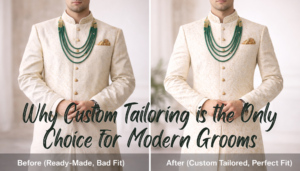
Measurements are taken along with posture and balance notes—because two people can share the same chest size and still need completely different jacket shaping. We adjust the pattern for clean lines through the shoulder, a flattering chest, and a waist that’s shaped without feeling restrictive.
Trial fitting(s)
This is where a good suit becomes a great suit. We validate:
- Jacket balance (how it hangs from the shoulders)
- Collar comfort (no gaps, no pulling)
- Sleeve length and arm mobility
- Trouser rise, seat comfort, thigh ease
- Taper and break (how the trouser meets your shoe)
Adjustments are made to match your preference: sharper and closer, or slightly easier for movement and long wear.
Final fitting & delivery
At the final fitting we confirm the details that make the suit feel “finished”: sleeve and trouser length, jacket length, waist suppression, and overall silhouette. You take delivery with guidance on care and aftercare.
Process Timeline (5 Steps)
- Consultation (style + purpose)
- Fabric & Styling (choose what you’ll see and feel)
- Measurement & Pattern (fit engineered for you)
- Trial Fitting(s) (refine balance and comfort)
- Final Fit & Delivery (finish, check, handover)
If you have a fixed event date, starting earlier reduces rush decisions and gives room for refinement.
What You Can Customize
Customization is where you turn a good suit into your suit. Most clients don’t need every option—just the right ones for their taste and daily use.
Jacket details (lapels, vents, lining, buttons)
Common jacket customizations include:
- Lapels: notch (versatile), peak (more formal/sharp), shawl (tuxedo/formal)
- Vents: double vents for movement, single vent for a classic look, no vent for a cleaner back line
- Lining: full lining for structure, half/unlined for breathability and softer feel
- Buttons: stance and material impact formality; subtle choices can make the suit feel more premium
- Pockets: flap (classic), jetted (sleek/formal), patch (more relaxed), optional ticket pocket
- Structure (where available): affects how the jacket shapes the chest and drapes over time
Trouser details (rise, pleats, break, waistband)
Trouser comfort and proportion are often what clients notice most after long wear. Options include:
- Rise: mid-rise for versatility; higher rise for comfort and stronger proportions
- Pleats: flat front for a cleaner look; pleats for comfort and classic styling
- Break: no break (modern), slight break (balanced), classic break (traditional)
- Waistband: belt loops or side adjusters; the latter reads cleaner and more tailored
- Taper and hem: affects how your suit looks with different shoes and how it moves
Choosing the Right Suit (First suit, daily wear, formal)
If you’re buying your first custom suit, choose versatility first. The most wearable options are navy and charcoal in a medium-weight fabric that works across seasons.
For daily wear, rotation is key. If you wear tailoring often, adding a second suit (or extra trousers) reduces stress on the fabric and extends lifespan.
For formal events, the goal is clarity: a wedding suit that looks sharp in photos without looking costume-like, or true black-tie pieces where the fabric finish and lapel choice matter more.
Timelines: When to Start (and how many fittings)
If your suit is for a specific date, start early enough to avoid compromises.
As a practical rule:
- Start 6–10 weeks before major events when possible
- Peak seasons may need more buffer depending on fabric availability and fitting slots
Fittings vary by route:
- Made-to-measure: commonly 1–2 fittings
- Bespoke: typically more fittings due to deeper refinement
If you’re on a tight timeline, we’ll guide you toward stable fabrics and proven cuts that reduce back-and-forth.
Pricing Factors (what impacts cost)
Custom suit pricing depends on a few high-impact drivers:
- Fabric quality and composition (wool grades, blends, seasonal weights)
- Construction and finishing (structure, internal build, hand-finishing level)
- Customization complexity (styling requests and special details)
- Garment set (2-piece vs 3-piece; extra trousers add value for rotation)
- Fit complexity (more adjustments and fittings can affect cost)
If you want a quick, accurate recommendation, share your use-case, event date, and style preference—we’ll propose options that match your priorities.
Care & Longevity (maintenance, storage, travel)
A well-made suit lasts longer when it’s treated correctly:
- Rotate wears; avoid wearing the same suit back-to-back
- Brush lightly after use and steam to refresh (dry-clean sparingly)
- Use a proper hanger to maintain shoulder shape
- Store in a breathable garment bag
- For travel, use a suit carrier or a proper folding method and steam on arrival
Ask about aftercare and minor refinement policies at delivery—good tailoring relationships include support after the purchase.
Book Your Consultation
If you’re ready to stop guessing your size and start wearing a suit that fits the way it should, we’ll guide you through the process end-to-end—fit, fabric, styling, and delivery.
FAQ
1) How long does a custom suit take?
Timelines depend on fabric availability and fitting schedules. Made-to-measure usually completes in several weeks; bespoke takes longer due to additional fittings.
2) How many fittings will I need?
Most made-to-measure suits require 1–2 fittings. Bespoke generally requires more fittings for refinement.
3) What’s best for a first suit?
A navy or charcoal suit in a medium-weight wool is the most versatile for work and events.
4) Can you match a reference photo?
Yes. Bring photos and we’ll adapt the style to your proportions and comfort so it wears well, not just looks good on a model.
5) What impacts price the most?
Fabric selection, construction level, and customization complexity are the biggest drivers.
6) Do you do alterations after delivery?
Most tailoring workflows include an aftercare window for minor refinements. Confirm the exact policy during your consultation.
7) Can I order extra trousers with the same jacket?
Yes—and it’s a smart choice if you wear suits often, because trousers typically wear out faster than jackets.8) What should I bring to the consultation?
Event details (if any), reference photos, and your typical shoe preference. If it’s for a wedding, share the color palette.