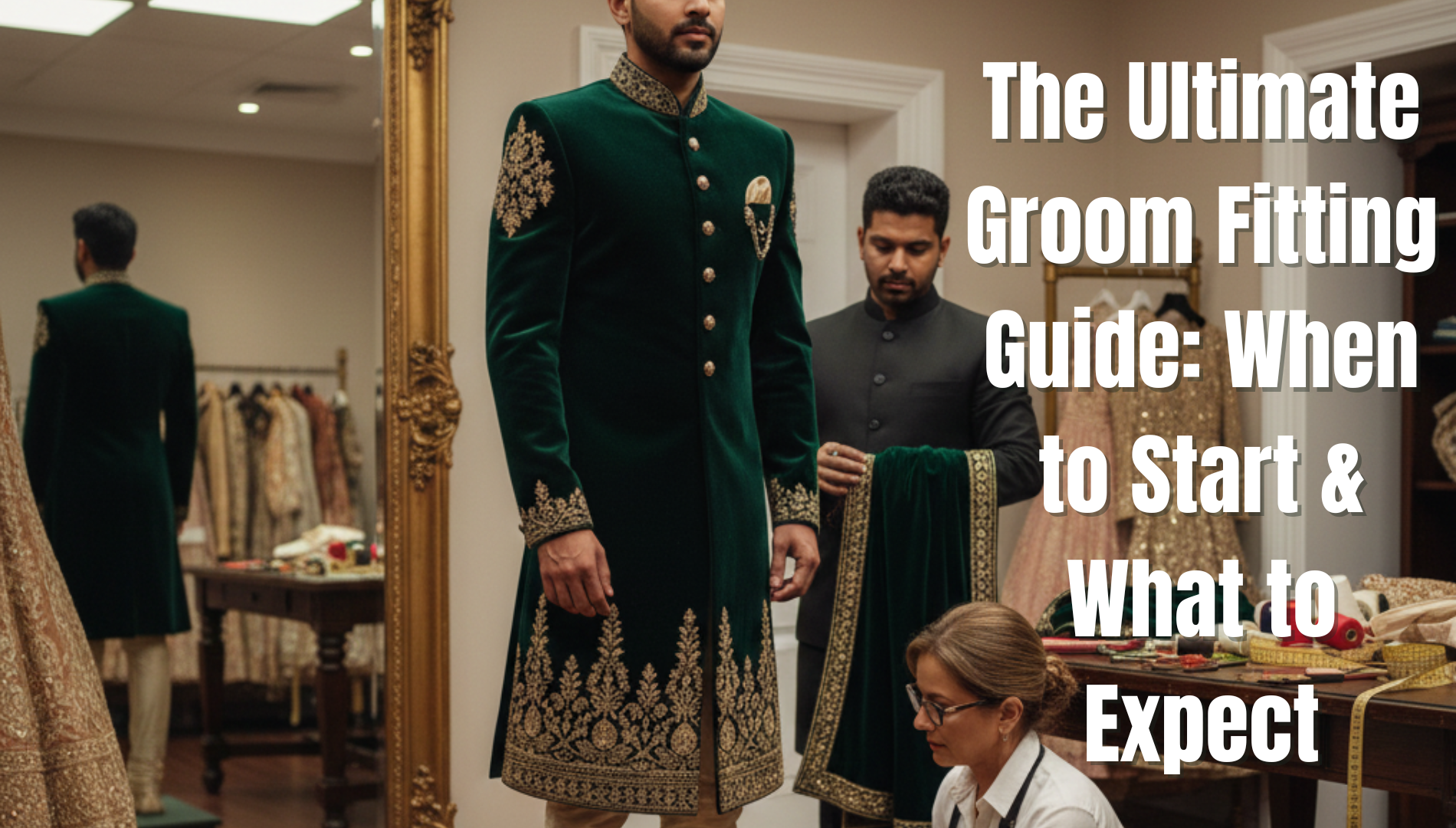
A groom’s wedding outfit is not just tailored clothing; it is a structured garment engineered to enhance posture, complement the bride’s look, and create a refined presence in every photograph. At 6E Design, Hyderabad the fitting process is one of the most important stages of crafting groom wear. Every inch, every stitch, and every structural detail contributes to the final elegance of the sherwani or Indo-western outfit.
This guide explains the complete groom fitting journey at 6E Design, including timelines, expectations, preparation, and expert recommendations for achieving the perfect fit.
1. Why Groom Fittings Matter
A groom’s outfit demands precision because it includes structured tailoring, embroidery placement, layering, and draping. A proper fit ensures the outfit maintains its shape and luxury throughout long wedding hours.
Benefits of a Perfect Fit
- Enhances posture and structure
- Maintains comfort during rituals
- Ensures the outfit looks premium and high-end
- Prevents bunching, sagging, or uneven draping
- Creates clean photo angles from all sides
- Keeps proportions aligned with the bride’s outfit
- Improves confidence during all ceremonies
A well-fitted groom outfit elevates your entire personality and presence.
2. Ideal Timeline: When Should a Groom Start Fittings?
To avoid last-minute complications, grooms should begin fittings 8 to 10 weeks before the wedding.
Standard 6E Design Fitting Timeline
Weeks 1–2
Design discussion, fabric selection, color coordination, detailed body measurements.
Weeks 3–4
First fitting: base structure, shoulder and sleeve evaluation, posture analysis.
Weeks 5–6
Second fitting: comfort checks, draping adjustments, embroidery alignment.
Weeks 7–8
Final fitting: complete outfit review, styling with accessories, final corrections.
Weeks 9–10
Final checks, collection, steam-pressing, and preparation for wedding week.
Starting early ensures ample time for corrections and a flawless final result.
3. The Groom Fitting Process — Step-by-Step
Each fitting session has a distinct purpose. Below is a breakdown of how the process works at 6E Design.
First Fitting: Foundation & Structure
This session focuses on the skeleton of the garment. The sherwani may not be fully finished, because structural accuracy must come first.
What Is Checked in the First Fitting
- Shoulder shape and positioning
- Chest circumference and ease
- Waist shaping
- Sleeve length
- Kurta or sherwani length
- Collar height and comfort
- Posture alignment
- Movement flexibility
This fitting establishes a strong structural base so the embroidery and final finishing sit correctly.
What the Groom Should Do
- Bring the wedding footwear
- Stand in a natural posture
- Inform the team about expected weight changes
- Communicate any discomfort clearly
Small adjustments here prevent major issues later.
Second Fitting: Refinement & Comfort
This fitting presents a near-complete version of the outfit.
Focus Areas in the Second Fitting
- Movement comfort (walking, bending, sitting)
- Dupatta or shawl drape testing
- Button placement symmetry
- Sleeve and armhole comfort
- Pant, churidar, or trouser tapering
- Embroidery alignment
- Shoulder correction refinements
This is the stage where most precision work is carried out, making sure the outfit is both stylish and practical.
Groom’s Checklist
- Try the full outfit as if wearing it during rituals
- Test different movements
- Check if breathing, bending, or sitting feels natural
This ensures maximum comfort for long wedding hours.
Final Fitting: Complete, Wedding-Ready Look
This fitting ensures the groom sees the final look exactly as it will appear on the wedding day.
What Happens in the Final Fitting
- Accessory pairing (mala, brooch, kalgi, pocket square)
- Dupatta drape finalization
- Footwear matching
- Sleeve and cuff checks
- Button strength checks
- Final length verification
- Quick photos to evaluate the visual impact
The goal of this session is to ensure that the groom is fully prepared.
Outcome
The groom leaves with a complete, refined, balanced look ready for photography, rituals, and celebrations.
4. Common Groom Fitting Mistakes to Avoid
Many grooms unknowingly make choices that delay the process or affect the fit. Avoiding these ensures perfection.
Typical Mistakes
- Delaying outfit selection too close to the wedding
- Wearing loose clothing during measurements
- Forgetting to bring wedding shoes to fittings
- Not aligning accessories early
- Standing incorrectly during measurement (slouching)
- Not practicing wearing the dupatta
- Ignoring minor discomfort thinking it will “adjust later”
- Weight fluctuations after measurements
Addressing these early leads to a smooth fitting journey.
5. Groom Preparation Guide Before Each Fitting
Proper preparation leads to a more accurate fitting experience.
Before Coming to a Fitting
- Wear fitted innerwear similar to what you plan to wear for the wedding
- Bring the correct footwear
- Bring the accessories already purchased
- Avoid bulky pockets
- Maintain natural body posture
- Eat normally to avoid measurement inconsistency
- Inform the team about weight training schedules
These details impact the accuracy of the final fit.
6. Why Groom Fittings Differ from Bride Fittings
Although brides often require more fitting sessions, groom outfits include technical tailoring elements that also require several adjustments.
Technical Elements in Groom Outfits
- Shoulder structuring
- Inner lining layers
- Collar stiffness
- Button alignment
- Embroidery weight distribution
- Cuff shaping
- Pant tapering
- Dupatta draping precision
When handled professionally, these elements elevate the groom’s visual presence.
7. How 6E Design Ensures a Perfect Fit
At 6E Design, every groom’s outfit is crafted through a meticulous, personalized fitting process.
Our Approach
- Precision measurements
- Custom pattern drafting
- Fabric behavior analysis
- Multiple fitting evaluations
- Structured tailoring
- Fine adjustments by senior tailors
- Bride-groom coordination styling (if required)
- Final visual assessment under camera-friendly lighting
This process guarantees a premium, balanced, and comfortable final fit.
8. Fitting Coordination for Multi-Event Wardrobes
If the groom has separate outfits for mehendi, sangeet, wedding, and reception, fittings must be planned in order of complexity.
Recommended Order
- Wedding sherwani (most structure, requires maximum detail)
- Reception tuxedo or Indo-western
- Sangeet outfit (mobility-focused)
- Mehendi outfit (light tailoring)
This ensures consistency, balance, and complete coordination across all events.
9. Final Groom Styling Guidelines Before the Wedding
A few days before the wedding, the groom should complete a final checklist.
Final Checklist
- Steam or iron all outfits
- Practice wearing the dupatta or shawl
- Try the entire outfit with accessories
- Store outfits on sturdy hangers
- Pack safety pins, brooches, and backups
- Avoid spraying perfume directly on the fabric
- Wear each outfit for ten minutes to ensure comfort
These last steps eliminate wedding-day surprises.
Conclusion
A groom’s outfit is only as strong as its fitting. It defines the groom’s presence, posture, elegance, and confidence throughout the celebrations. Through a structured fitting process, expert tailoring, and attention to detail, 6E Design ensures every groom looks refined, comfortable, and impeccably styled.
Whether the outfit is traditional, modern, or Indo-western, the fitting process brings it to life. With the right timeline and professional guidance, your outfit becomes a part of your personality—crafted exclusively for you.